Civics
Commissioner Kerry Hill never voted for a tax increase???
Kerry Hill said she never voted for a tax increase. What does her voting record say?
March 21, 2026 · Heritage Forsyth · 5 min read
Spoiler Alert: Either Kerry Hill does not understand Georgia law, or she is intentionally trying to mislead voters when she says she never voted for a tax increase.
Kerry Hill's record on millage rate votes and property tax increases
Kerry Hill has been the District 1 Commissioner for Forsyth County since 2023. She is up for re-election this year. On her current campaign website, she proudly claims:
"Kerry Hill has never voted for a tax increase. Not once."
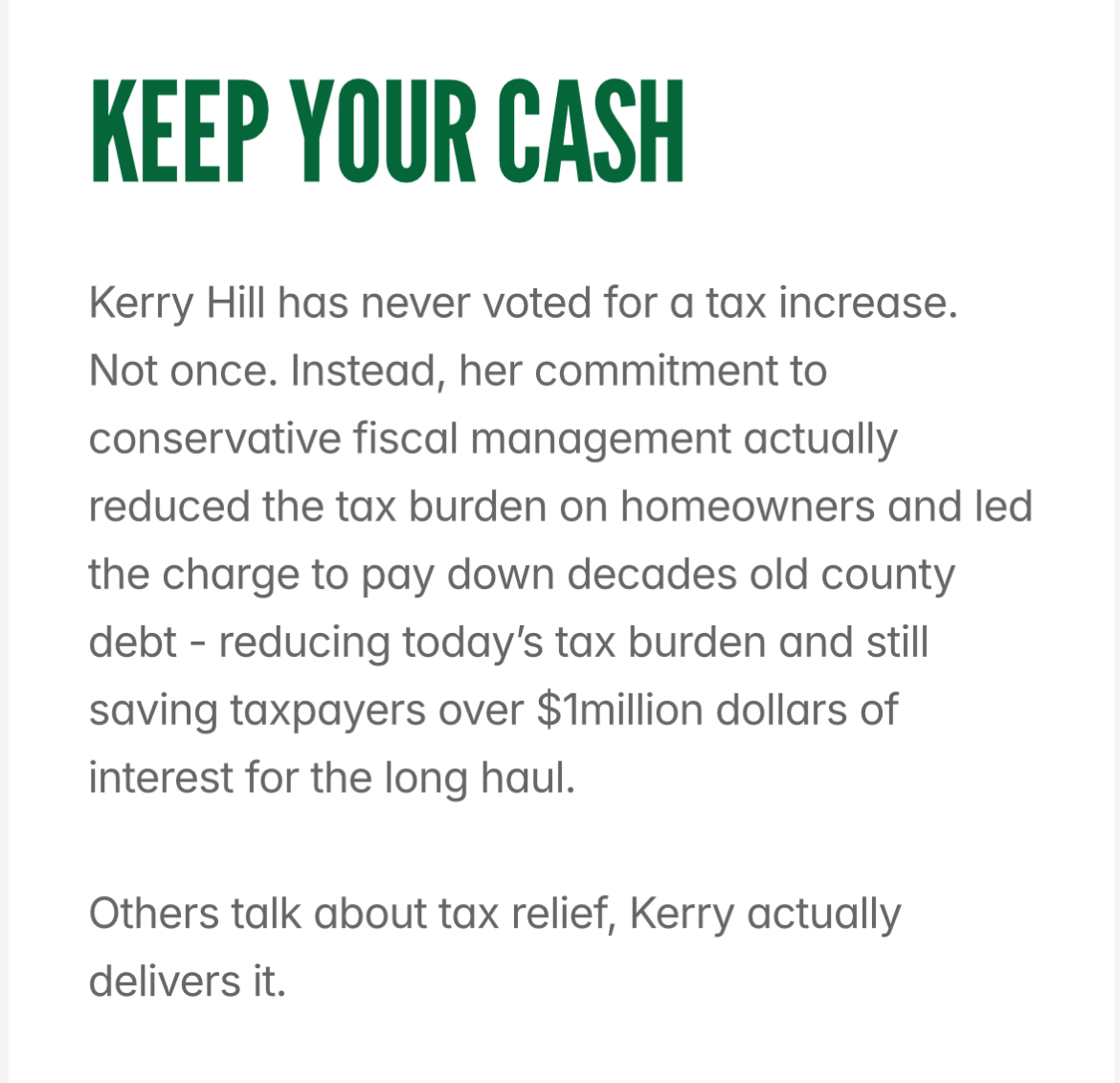
Update | April 19, 2026: Kerry Hill has now gone on video making the same claim.
Nice claim. It really pumps up voters. But let's look at her actual voting record on tax increases. First, we need to understand how Forsyth County raises revenue each year.
How Forsyth County increases its tax revenue
There are two ways the county can increase its tax revenue each year. First, through inflationary increases, which include market appreciation and county home-value reassessments. The second is through new development.
Inflationary increases
Georgia state law is designed to protect taxpayers from inflationary increases year over year. Just because your neighbor sold their house for more money than what you paid for yours should not mean you have to pay more taxes on your house this year. Georgia law and the Georgia Property Taxpayer's Bill of Rights require counties to calculate a rollback millage rate when property values rise so a "hidden" or inflationary tax increase does not happen automatically. The rollback rate is the millage that would generate roughly the same total tax revenue from existing properties as the year before and keep property taxes flat. In other words, it's a way to keep your tax bill from going up simply because your home is now worth more on paper. The county must calculate the rollback rate annually. If the Board of Commissioners chooses not to adopt the rollback millage rate, Georgia state law requires the county to publicly advertise that decision as a PROPERTY TAX INCREASE and hold three public hearings.
In years when the housing market appreciates, all the commissioners have to do to keep property taxes flat is nothing. Instead, Hill and her fellow commissioners choose to use the legal loophole of holding three public hearings so they can then vote to maintain the millage rate and raise your property taxes.
When property values rise, voting to maintain a flat millage rate is voting for a property tax increase.
New development
The rollback rate does not impact any increase to the tax digest that comes from new properties. Whenever new homes are built, that automatically increases the county's tax digest. We're all aware of the amount of new development Forsyth County has seen for decades. The county is making plenty of money from new homes, there's no need to increase taxes on current property owners.
2025 Example
Here's how it played out in Forsyth County in 2025.
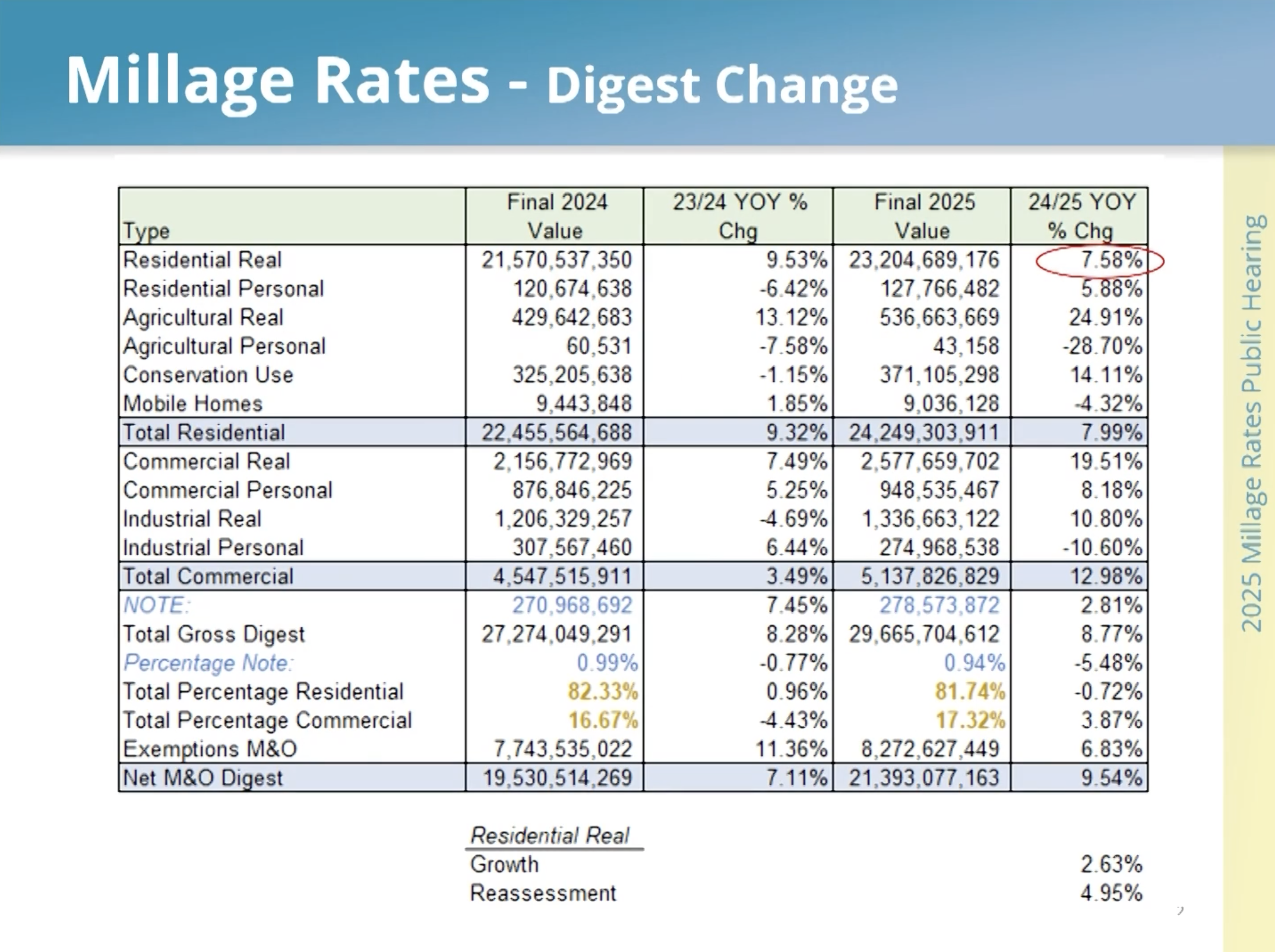
The Maintenance and Operations tax digest grew from about $19.53 billion in 2024 to $21.39 billion in 2025. That's a 9.54% increase. That growth included both rising values on existing homes and new development. For example, residential property values increased by 7.58%, driven by about 4.95% from reassessments and 2.63% from new growth. If the county had adopted the rollback rate, it would have reduced the millage from 4.791 mills to about 4.52 mills, offsetting the increase from reassessments while still allowing revenue growth from new construction. Instead, the county maintained its millage rate and captured both sources of growth. For a $600,000 home, that decision translated to roughly $65 to $70 more per year for the homeowner, even before factoring in rising home values. That may not break the bank in a single year, but it adds up year after year. And it's not the county's money to begin with.
Forsyth County does offer a "Homestead Exemption" that helps offset some inflationary increases each year. It works out well for folks who opted in 15 to 20 years ago, but it's not much help if you're a young family looking to buy your first home or move into a new house to accommodate your growing family.
Kerry Hill's Voting Record
Hill's record is straightforward. When she says she "never voted for a tax increase," the public record says otherwise.
2023
- Forsyth County commissioners invoked the legal loophole to not adopt the rollback millage rate.
- Property values increased.
- Rollback millage rate was calculated.
- Notice of property tax increase was published by Forsyth County.
- Required public hearings were held.
- Hill voted YES to maintain the millage rate from the previous year despite inflationary increases, thereby voting to increase property taxes on Forsyth County taxpayers.

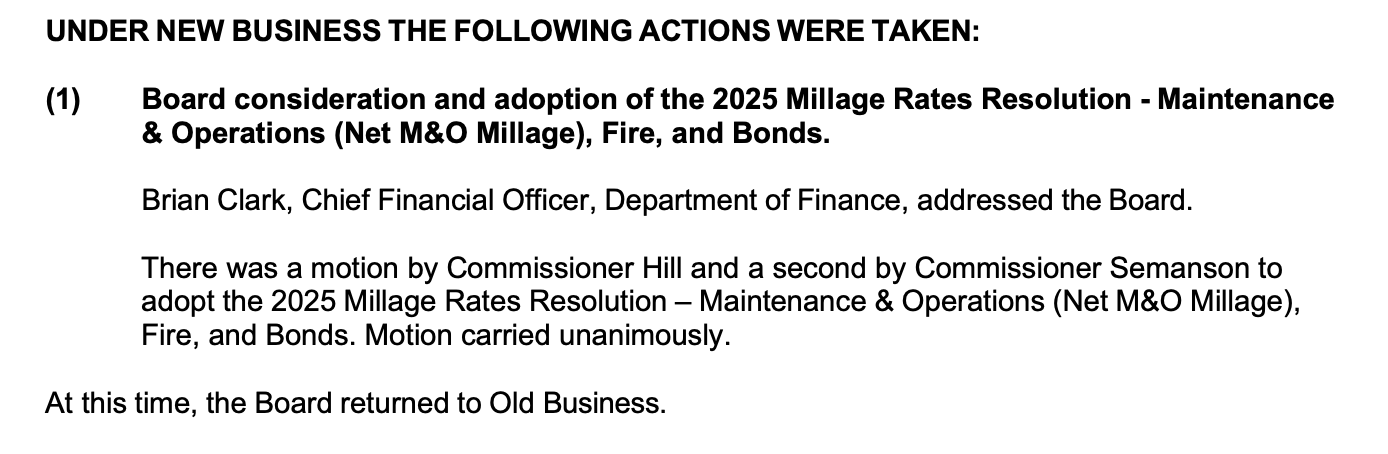
2024
- Forsyth County commissioners invoked the legal loophole to not adopt the rollback millage rate.
- Property values increased.
- Rollback millage rate was calculated.
- Notice of property tax increase was published by Forsyth County.
- Required public hearings were held.
- Hill voted YES to maintain the millage rate from the previous year despite inflationary increases, thereby voting to increase property taxes on Forsyth County taxpayers.
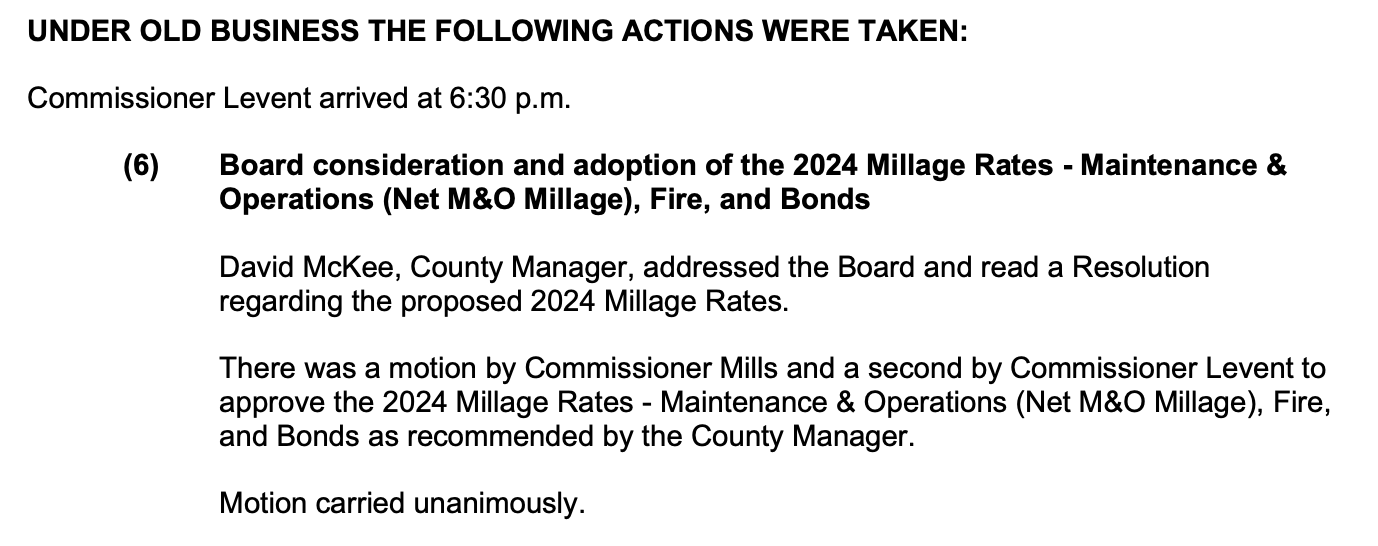
2025
- Forsyth County commissioners invoked the legal loophole to not adopt the rollback millage rate.
- Property values increased.
- Rollback millage rate was calculated.
- Notice of property tax increase was published by Forsyth County.
- Required public hearings were held.
- Hill made the initial motion and voted YES to maintain the millage rate from the previous year despite inflationary increases, thereby voting to increase property taxes on Forsyth County taxpayers.
"Kerry Hill has never voted for a tax increase. Not once."

Based on Georgia law, Commissioner Hill has voted for a tax increase every year she has been in office. Either Kerry Hill does not understand Georgia law, or she is intentionally trying to mislead voters.
Want to see who helps fund Kerry Hill's campaigns? Check out Kerry Hill's donor list.
Related Stories

Civics
Forsyth County Commission Candidate Campaign Finance: Shuchita PatelWho funds Shuchita Patel - Democrat Candidate for Forsyth County Commission District 3?
June 10, 2026 · Heritage Forsyth · 1 min read

Civics
Forsyth County Commission Candidate Campaign Finance: Adam RodesWho funds Adam Rodes - Republican Candidate for Forsyth County Commission District 1?
May 15, 2026 · Heritage Forsyth · 1 min read

Civics
Forsyth County Commission Candidate Campaign Finance: Hank SullivanWho funds Hank Sullivan - Republican Candidate for Forsyth County Commission District 1?
May 15, 2026 · Heritage Forsyth · 1 min read