History
Eldo Grogan: Soldier and Poultry Pioneer of Forsyth County
World War II veteran, poultry pioneer, banker, and longtime Cumming businessman whose work helped define a growing county.
May 29, 2026 · Heritage Forsyth · 5 min read
Some lives carry the story of a place through more than one era. Eldo Grogan's life did that for Forsyth County. He was born into hard farm work, returned from World War II with stories that sounded almost impossible, helped build one of the county's defining industries, and later joined the group of businessmen who brought a new bank to a growing community.
Early Life
Earnest Eldo Grogan was born on October 20, 1916, in Dawson County, the sixth of twelve children born to Andrew Jackson Grogan and Anna Gooch Grogan. With fourteen people in the household, there was no shortage of work and no room for idleness. Eldo grew up picking cotton from dawn to dusk, working at a sawmill, driving a truck, and doing whatever else helped bring money into the household. Even before he was grown, he felt responsible for his younger brothers and sisters and tried to make life easier for his mother.
That sense of duty followed him when he left home for work in Gainesville. He took a job delivering mail, stayed in a boarding house on Green Street because the trip home was too far to make each day, and kept sending money back to his family. It was the pattern of his early life: work hard, keep moving, and make sure others were cared for.
World War II
Everything changed on June 27, 1941, when Grogan was drafted into the U.S. Army. He was inducted at Camp Wheeler in Macon, then transferred to Camp Polk, Louisiana. He later trained at Desert Center, California, for battle in North Africa. After the bombing of Pearl Harbor, his path shifted again. He was sent to Indiantown Gap, Pennsylvania, and then overseas to England, where American troops were gathering for the invasion of Normandy.
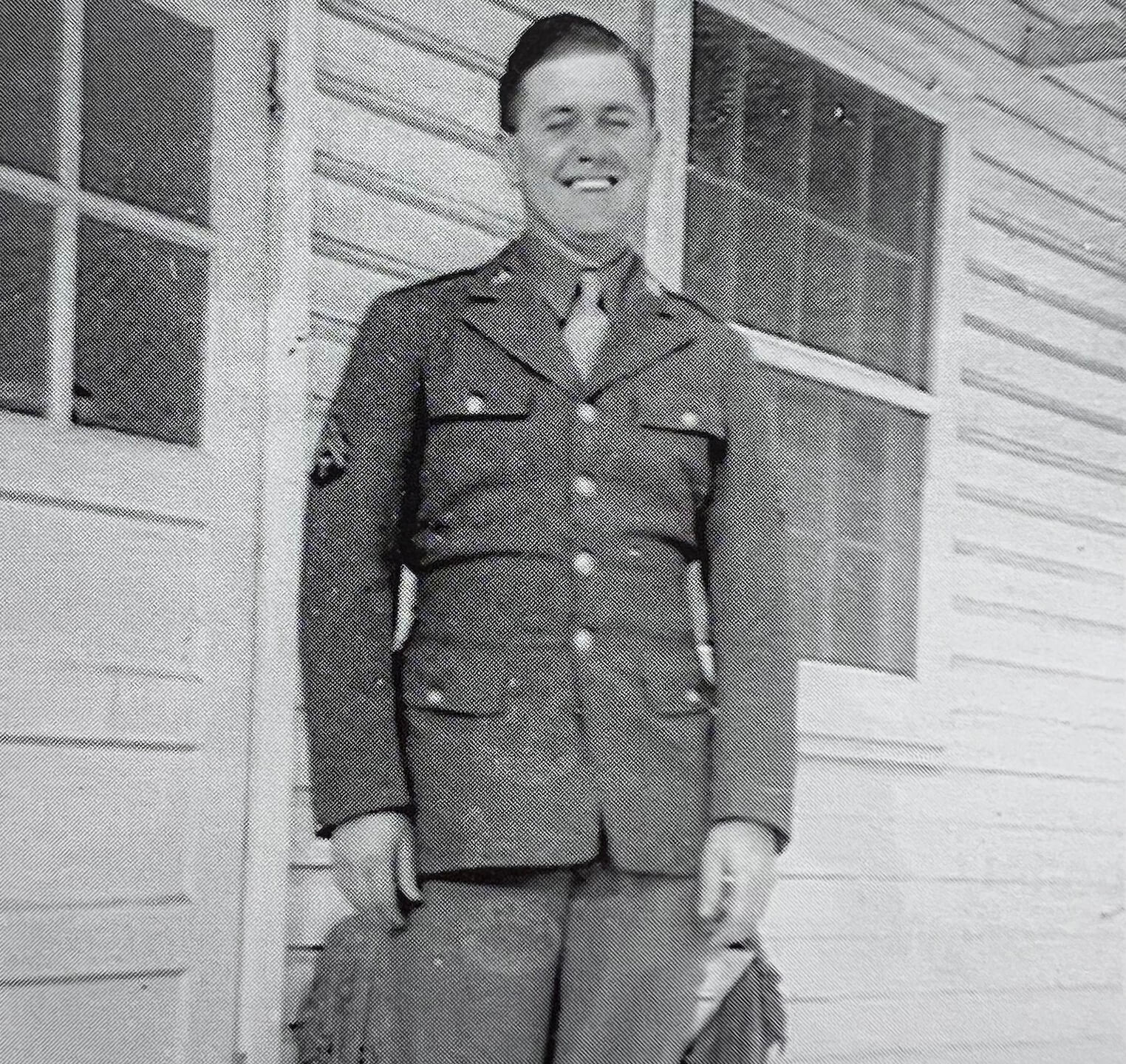
By the time the final preparations for D-Day were underway, Grogan was driving a gasoline tank truck. As the story was later told in his family history, his truck was the last one loaded onto a landing craft, which meant it would be the first one ordered off. When the boat stopped hundreds of yards from shore after apparently running aground on a sandbar, the ramp dropped straight down into the water. Grogan was ordered to drive off anyway.
He refused long enough to make his case. If he drove into the water, the truck and its fuel could be lost, and the men behind him could be put in danger. Grogan convinced the officer to wait until the current shifted the craft closer to shore. It was a moment of common sense under pressure, and it allowed the trucks and men to continue their long push into France.
Another story stayed with him from the Battle of the Bulge. Grogan's truck was equipped with a .50-caliber machine gun and a gunner, and his job was simple only on paper: get fuel to the tanks no matter what. Through snow, mud, wreckage, and enemy fire, he became known as "Lead Foot." Before a German fuel dump was destroyed by U.S. troops, Grogan raced in and filled his tanker with German fuel. According to the family account, he loved telling that story.
Grogan served in combat in France, Belgium, and Germany. Even while overseas, he continued sending money home to help support his family. He received several honors, including a Presidential Citation, the Good Conduct Medal, and the American Defense Medal, and was honorably discharged on October 14, 1945.
Home and Family
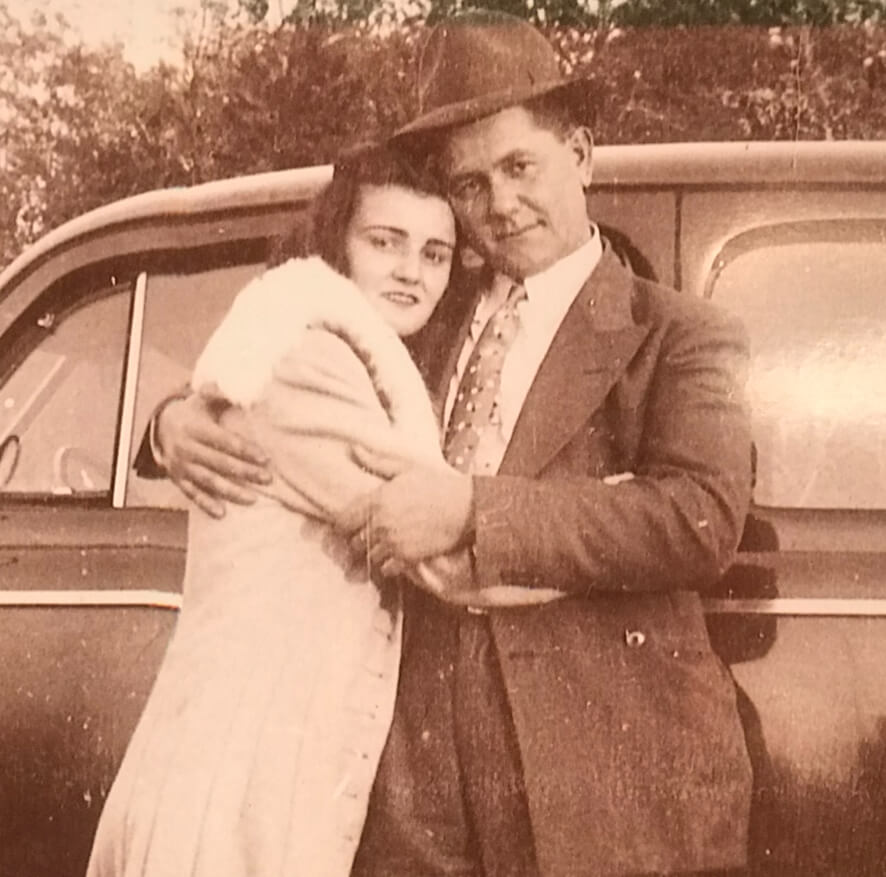
Two months after his discharge, on December 16, 1945, Eldo Grogan married Effie Mills. They made their home in Forsyth County, where they raised three children: Suzanne, Penny, and Rickey. Their marriage lasted fifty years, and family remained one of the steady centers of his life. By the time of his death, Grogan had eleven grandchildren and three great-grandchildren. Two more were born after his passing.
Grogan was also a member of Oak Grove Baptist Church, where he served as a deacon.
Poultry Pioneer
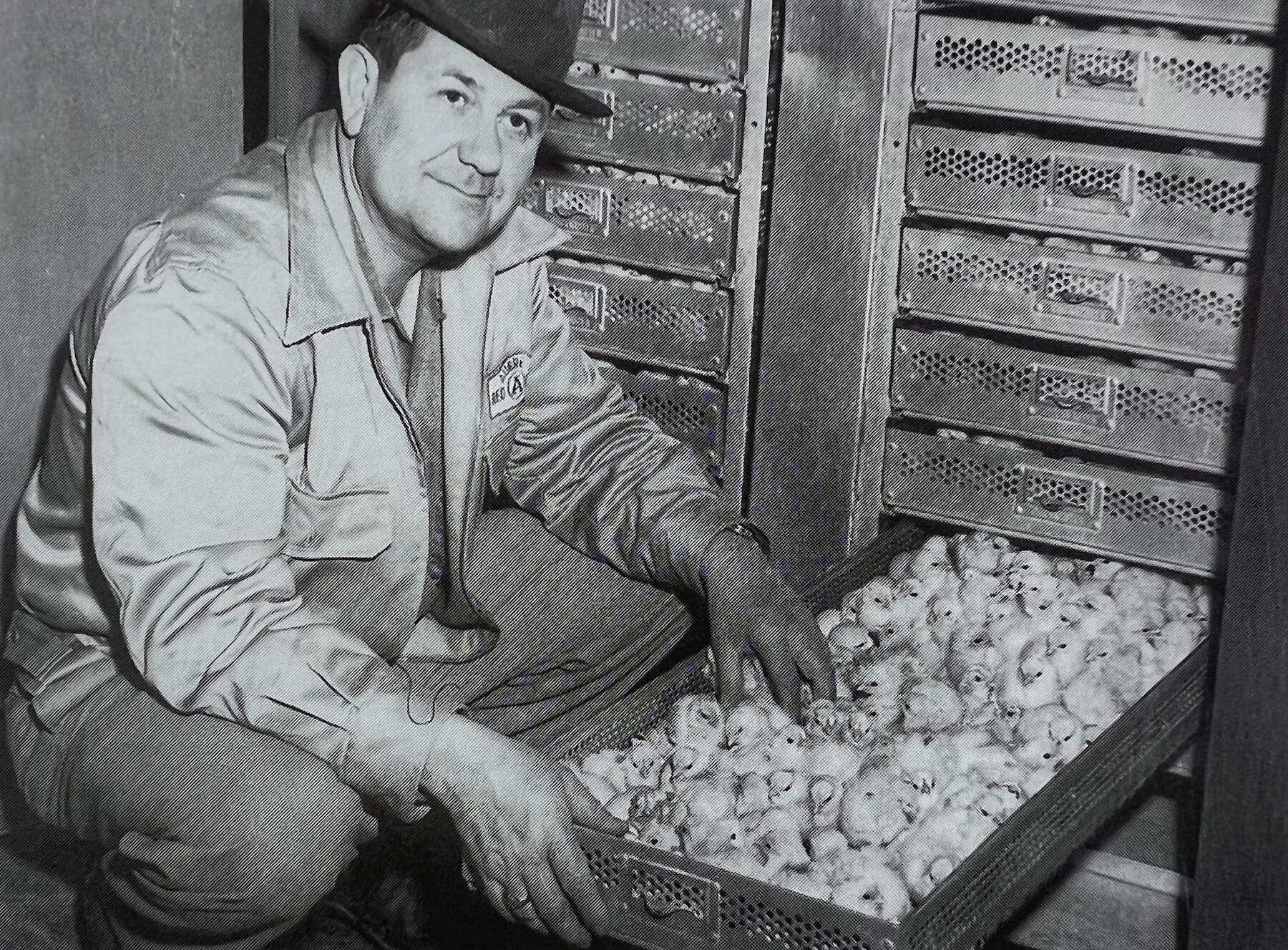
After the war, Grogan became one of the pioneers of Forsyth County's poultry business. He started his work in the industry in the 1940s and became one of the area's most prominent businessmen. He owned hatcheries and processing plants, operated Grogan's Feed Mill and Grogan's Hatchery, and sold baby chicks to others who wanted to start poultry operations of their own.
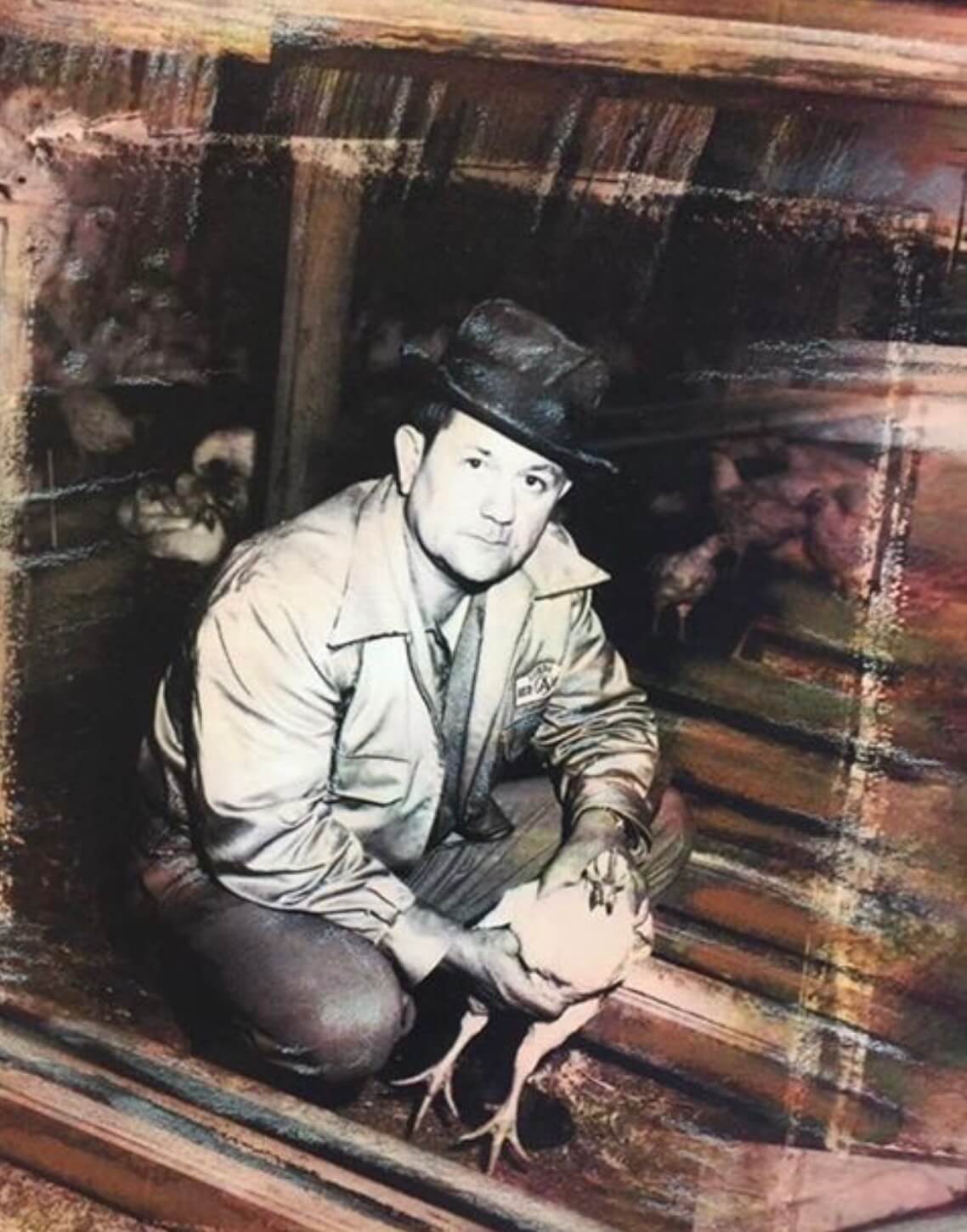
The poultry industry helped change the economy of Forsyth County, and Grogan was part of that change at ground level. He was remembered for a work ethic that began before sunrise. He got up at 3 a.m. to catch chickens, haul and load feed, and work in the hatcheries. By 1961, when he was photographed inside one of his poultry houses for Broiler Industry magazine, Grogan had one million chickens on his farms.
Banking and Community
Grogan's business life also reached beyond poultry. On Valentine's Day in 1964, a group of local businessmen learned from Georgia Secretary of State Ben W. Fortson that the charter of incorporation for Forsyth County Bank had been issued. The incorporators were Eldo Grogan, A. C. Smith, Carl Jackson, George Bagley, John Stiller, and Leon Boling. The actual charter followed on June 15, and the first stockholders' meeting was held on June 18.
Starting a new bank was not a small matter. Forsyth County had not had more than one bank since the late 1920s, and the new institution began with capitalization of $250,000. It was another sign that the county was changing, and Grogan was again among the people willing to put in the work to help build what came next.
Final Years and Legacy
Effie died on December 31, 1995, and her funeral was held at Oak Grove Baptist Church on January 2, 1996, with burial at Sawnee View Gardens. Eldo died on July 11, 1998, at age 81, following a long illness.
It is easy to describe Grogan by his titles: soldier, farmer, hatchery owner, banker, and church deacon. The stronger thread through his life was responsibility. As a boy, he helped feed a large family. As a soldier, he got fuel where it had to go. As a businessman, he helped grow an industry that became central to Forsyth County's economy. As a community member, he helped build institutions that lasted beyond his own lifetime.
Forsyth County was built by people like Eldo Grogan: people who rose before daylight, carried heavy obligations without complaint, came home from war, started businesses, supported churches and families, and kept working until their names became part of the place itself.
Related Stories
History
The life of a Forsyth County country doctorGenerations of Bramblett's have cared for Forsyth county residents.
January 13, 2026 · Heritage Forsyth · 6 min read
History
Almon C. Hill: The educator who helped shape modern Forsyth CountyCoach, superintendent, school board member, and one of the most influential education leaders in Forsyth County history.
January 2, 2026 · Heritage Forsyth · 3 min read
History
History of Keith BridgeFrom Keith's Ferry to a covered bridge later swallowed by Lake Lanier, this crossing linked Forsyth and Hall for generations.
December 17, 2025 · Heritage Forsyth · 2 min read